Work boots under $150: what to look for
Published September 15, 2026
Safety-toe types, waterproof membranes, construction that can be resoled and the models from Carhartt, Keen, Danner, Timberland PRO, Wolverine and Red Wing that regularly land under $150 on closeout.
Work boots are one of the categories where off-price shopping pays best. The brands rarely change the boots themselves; they change colours, add a new midsole name, retire a model number and reissue it. Every one of those changes pushes last year's version into closeout at a price the boot deserves. Here is how we judge a work boot listing, and which brands consistently show up under $150.
Start with the job
Before the brand, decide what the boot needs to do:
- Safety toe or soft toe? If your site requires one, the listing will say "safety toe", "steel toe", "composite toe" or "alloy toe" and cite ASTM F2413. Soft-toe boots are lighter and more comfortable; do not buy one hoping it passes.
- Waterproof or not? A membrane adds cost, weight and warmth. If you work indoors or in a dry climate, skip it and buy a leather boot you can treat yourself.
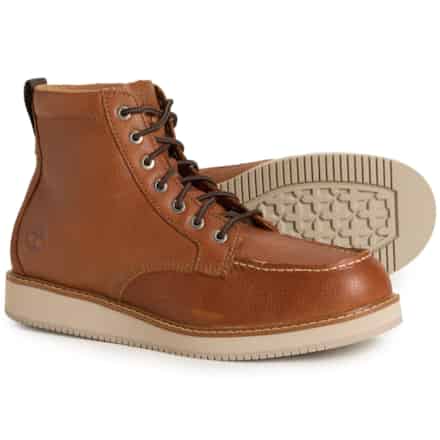
- Wedge or heeled sole? Wedge soles (flat, full-contact) are the choice for concrete floors and roofing. Heeled, lugged soles grip better on ladders, mud and uneven ground.
- Height. Six-inch is the standard and the most common closeout. Eight-inch gives ankle support for uneven ground at the cost of weight.
Safety toe types
All three meet the same ASTM impact and compression ratings (the "I/75 C/75" you see on the tag), so the difference is comfort, not protection.
- Steel is the cheapest and the thinnest, so the toe box can be slimmer. It conducts cold and sets off metal detectors.
- Alloy (usually aluminium) is lighter than steel with a similarly slim profile. A good middle choice.
- Composite (carbon fibre, Kevlar or plastic) is the lightest, does not conduct cold or electricity, and passes metal detectors. The toe box is larger. Most premium work boots now default to composite.
Other codes worth knowing: EH (electrical hazard, a non-conductive sole), SD (static dissipative, the opposite requirement, for electronics work), PR (puncture-resistant plate) and MT (metatarsal guard). The listing should state these; if it does not, assume the boot has none of them.
Waterproof membranes
A waterproof boot has a bootie of membrane (Gore-Tex or a brand's own: Keen.Dry, TimberDry, Danner Dry, Wolverine's various names) sewn inside the leather. All of them keep water out when new. The differences are breathability and lifespan; Gore-Tex is the benchmark, the proprietary membranes are generally fine for a work boot's life. What kills waterproof boots is not the membrane but the leather over it drying out and cracking, so treat the leather.
Non-waterproof full-grain leather, oiled or waxed regularly, keeps out rain and mud for hours and breathes better. For many jobs it is the better boot.
Construction and resoling
This is where the price of a boot is decided, and where a closeout can put a $250 construction under $150.
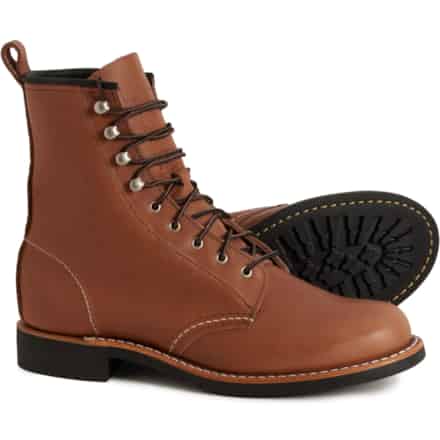
- Goodyear welt. The upper is stitched to a welt, which is stitched to the sole. A cobbler can replace the sole several times. Heavier, stiffer, longest-lived. Red Wing's work line, Wolverine's 1000 Mile and many Danner and Carhartt boots use it.
- Stitchdown. The upper is flared outward and stitched directly to the midsole. Also resoleable, a little lighter. Danner's traditional construction.
- Cement. The sole is glued. Lighter, more flexible, cheaper, and generally not worth resoling. Most athletic-style work shoes and many Keen Utility models.
- Direct-attach / injection. A polyurethane midsole is moulded onto the upper. Very comfortable for standing all day, very durable, not resoleable. Common on Timberland PRO and Carhartt's wedge boots.
A cemented or direct-attach boot is not a bad boot; it is a boot with a fixed lifespan. If the closeout price is $90, that is a fair trade. If you are paying $140, we would rather see a welt.
The brands under $150
Carhartt. Carhartt's footwear is made under licence, and it is aimed squarely at this price range. Look for the Rugged Flex line (cemented, comfortable, waterproof options) and the wedge-sole boots, which are often welted. Frequent closeouts because the line refreshes colours annually.
Keen Utility. Keen's work division. The Cincinnati (welted) and the Lansing, Detroit and Flint models (cemented). The Keen asymmetrical toe, whether steel or carbon-fibre, gives a roomy toe box that people with wide feet prefer. Keen.Dry membrane on the waterproof versions. Keen Utility is one of the most common work-boot closeouts we see.
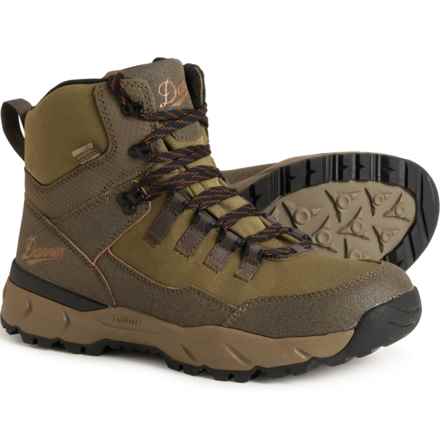
Danner. The Portland, Oregon boot maker's work line includes the Bull Run (stitchdown, made in the USA, usually above $150 at full price but a regular closeout candidate), the Vicious and the Quarry. The imported Danner models (Crafter, Steel Yard) come in well under $150 and share the fit.
Timberland PRO. The Pit Boss is the archetypal sub-$150 steel-toe boot, welted, and one of the most produced work boots in the world. The Boondock (direct-attach, waterproof) and the Hypercharge sit a little higher. Timberland PRO's anti-fatigue footbeds are a genuine advantage for concrete floors.
Wolverine. The Raider (cemented, waterproof), the Overpass and the Floorhand are the volume models and close out regularly. Wolverine's DuraShocks cushioning is well-liked, and the brand's welted boots are underrated.
Red Wing. Red Wing's work boots almost never fall under $150 at full price; the Heritage line (Iron Ranger, Classic Moc) starts well above it. When a Red Wing work boot does appear on closeout in your size, it is almost always a welted, resoleable boot and worth a close look. Do not expect it to last long.
What we check on a listing
- The construction, if the listing says. "Goodyear welt" or "resoleable" is worth paying for.
- The toe type and the safety codes, spelled out.
- The width. Work boots are made in wide (EE or 2E) more often than any other category, and the wide versions close out last.
- Whether your size is still there. Work boots sell in the 9 to 11 band fastest, so do not wait on a common size.
- Whether the price is a real markdown or a reference price. A $160 boot at $149 is a boot at list price.
A good work boot under $150 is not a compromise. It is the same boot, a year later, at the price the market had already decided it was worth.