Packs: daypack vs overnight, torso sizing, and why last season's colourway is the deal
Published September 15, 2026
How to pick a pack by volume and suspension, measure your torso, fit a hipbelt, and why an Osprey, Deuter, Gregory or JanSport in last year's colour is the same pack for less.
Backpacks are the category where "last season's colour" is most literally true. A pack model runs for three to five years with the same frame, fabric and pockets; the brand changes colours every year to keep it looking new. Every colour change creates a closeout of a pack that is identical to the one at full price. Here is how we pick a pack, how to fit one, and which models to watch.
Volume: what you are actually carrying
Pack volume is quoted in litres, and it is the first filter.
- 10 to 20 L: running vests, hydration packs, minimalist daypacks. A water bottle, a layer, lunch.
- 20 to 30 L: the general-purpose daypack. Room for a rain shell, an insulating layer, food, water and a first-aid kit. This is the size most people should own, and it is the most-discounted.
- 30 to 45 L: big day hikes, winter days with more layers, or an overnight if your gear is light and compact. Also the carry-on travel size.
- 45 to 60 L: a weekend of backpacking with normal gear: tent, bag, pad, stove, two days of food.
- 60 L and up: multi-day trips, winter camping, carrying a child's gear as well as your own.
Buy for the trips you take most, not the one you might take; half-empty packs carry badly.
Suspension: what turns weight into comfort
Below about 20 pounds, a pack is a bag with straps and the suspension barely matters. Above that, it is everything.
- Frameless packs rely on the contents for shape. Light, cheap, fine to 15 pounds.
- Framesheet packs have a plastic sheet, sometimes with a single alloy stay, that transfers some load to the hipbelt. Most daypacks and light overnight packs.
- Internal frame packs have alloy stays or a perimeter frame that carries the load to a padded hipbelt. Everything from 45 L up, and the reason a 35-pound load can be comfortable.
- Ventilated / trampoline back panels (Osprey's Anti-Gravity, Deuter's Aircomfort, Gregory's FreeFloat) hold the pack away from your back on a tensioned mesh. Much cooler, slightly heavier, and they pull the load a little further from your spine.
A well-fitted pack puts 70 to 80% of the weight on the hips and the rest on the shoulders. If your shoulders hurt, the hipbelt is not doing its job, usually because the torso length is wrong.
Torso sizing, the part people skip
Pack size is not your height; it is your torso length, measured from the C7 vertebra (the bump at the base of your neck when you tilt your head forward) down the spine to the top of your hipbones (the iliac crest, found by putting your hands on your hips with thumbs pointing back). Most adults measure 16 to 21 inches.
Brands size packs by torso ranges: roughly S 15 to 17 in, M 17 to 19, L 19 to 21, with some overlap. Many packs are now made in an adjustable version that covers two sizes with a sliding harness; Osprey's Talon and Tempest, Deuter's VariSlide packs and Gregory's Zulu and Jade are examples. Adjustable is safer to buy unseen, and it is what we recommend for a closeout you cannot try on.
A hipbelt should wrap the top of your hipbones with the padding centred on them, not sit at the waist.
Women's-specific packs (Osprey's Aura and Tempest, Gregory's Deva and Jade, Deuter's SL line) have shorter torso ranges, narrower shoulder straps and angled hipbelts.
Fabric and weight
Daypacks and mainstream backpacking packs use 210 to 420 denier nylon, sometimes with a heavier base. That is durable enough for years of trail use. Ultralight packs use lighter fabrics and fewer features to save a pound or more; they are a niche where closeouts are rare. A 24 L daypack with a framesheet weighs around two pounds; a 55 to 65 L internal-frame pack, four to five.
The brands we go back to
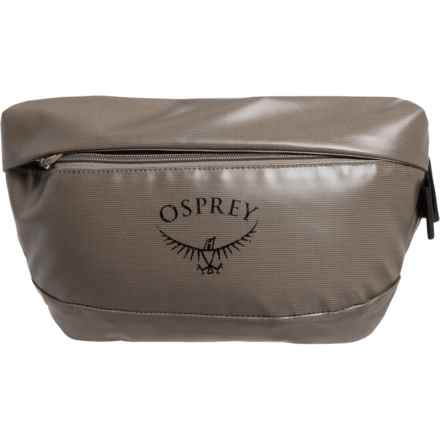
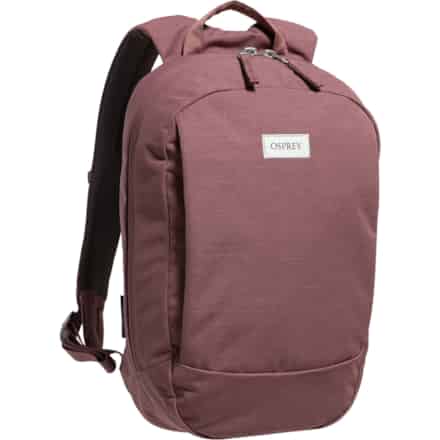
Osprey (Cortez, Colorado). The broadest range and the most frequent closeouts, because the colour cycle is annual and the model range is huge. Daylite and Daylite Plus (small daypacks), Talon and Tempest (adjustable, 22 to 44 L), Stratos and Sirrus (ventilated daypacks), Exos and Eja (light backpacking), Atmos AG and Aura AG (ventilated backpacking, the best-selling backpacking packs in the category), Aether and Ariel (heavy loads). Osprey's "All Mighty Guarantee" repairs any pack of any age; it is a large part of the value.
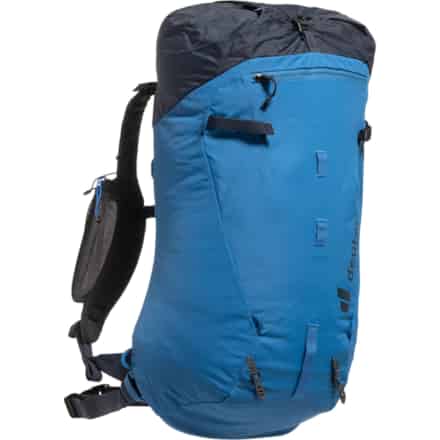
Deuter (Germany). Excellent build quality, ventilated Aircomfort back panels, and a slightly longer torso fit on average. Speed Lite (light daypacks), Futura (ventilated daypacks), Aircontact and Aircontact Core (backpacking). Deuter closeouts are less frequent but often deeper, because the brand is less known in the US.
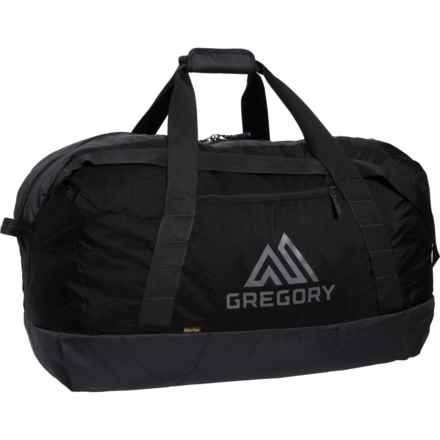
Gregory (Salt Lake City, Utah). Known for hipbelts and load-carrying. Nano (small daypacks), Zulu and Jade (adjustable, ventilated), Paragon and Maven (light backpacking), Baltoro and Deva (the reference heavy-load packs). Gregory's warranty covers defects for the life of the pack.
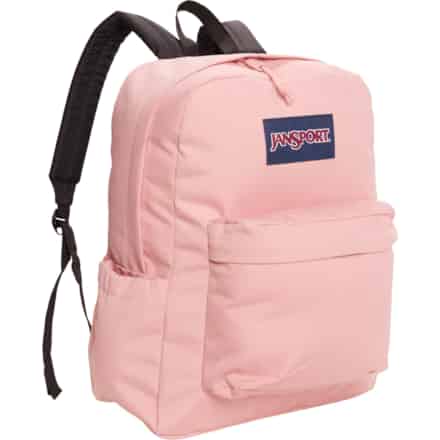
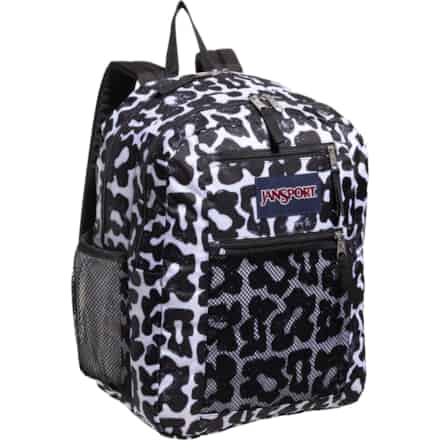
JanSport. The SuperBreak and Right Pack are school and travel packs, not hiking packs: no hipbelt, no frame, a lot of fabric and a lifetime warranty. They are also cheap, close out in dozens of colours, and outlast most hiking daypacks in daily use. If you need a bag for a laptop and a lunch, this is the deal.
Why the colourway is the deal
When Osprey retires a colour, the outgoing packs go to off-price stores at 30 to 50% off, and the pack under the fabric is the same one selling at full price next to it. The only things to check before you buy:
- The model version. Osprey and Gregory add version numbers or years to their bigger packs when the frame or fit changes. An Atmos AG 65 from three years ago is a slightly different pack from this year's. The differences are usually small; look them up.
- The size. Closeouts break by size, and packs come in three. If you are between sizes, choose the adjustable version.
- The hipbelt size, on packs that have separate ones.
- The raincover. Included with most Deuter and Osprey backpacking packs, sold separately on many daypacks.
Nothing about a pack changes with its colour. A daypack in a colour nobody wanted, at half of list, with a lifetime guarantee, is as good as pack buying gets. We keep coming back to these brands precisely because the colour cycle makes the timing so predictable.